
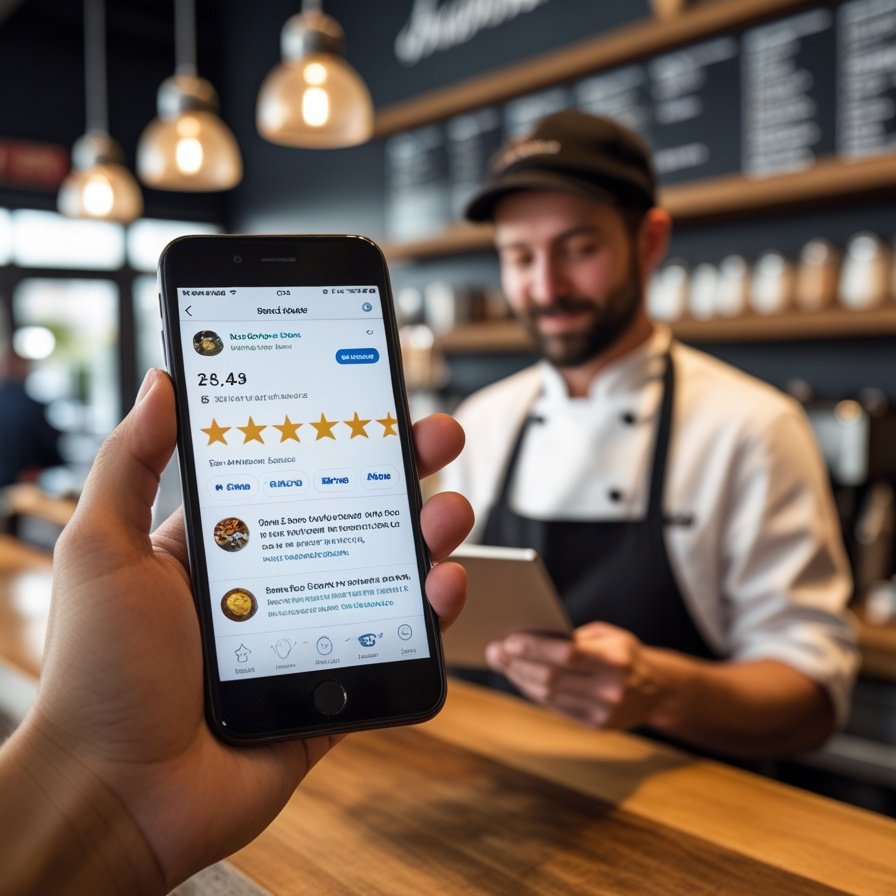
You know the feeling. A notification pops up — new review — and your stomach drops before you’ve even read it. For a lot of Maine business owners, especially when the business is you, a single one-star can ruin a whole evening. That stress is real, and it even has a name: review anxiety.
It comes from a real stake. More than nine in ten people read reviews before they buy, which means your rating genuinely moves customers in and out the door. But here’s the part the anxiety hides: reviews aren’t a threat to manage so much as the best free feedback you’ll ever get. With a simple system, they go from something you dread to something you use. Here’s how to build it.
First, reframe what a review actually is
The single fastest way to lower the stress is to change what you think you’re looking at. A review isn’t a verdict on you as a person — it’s market research you didn’t have to pay for. A consultant would charge thousands to tell you exactly what your customers expect and where you’re falling short. Your reviews tell you that for free, in your customers’ own words.
So the worst move is the one anxiety pushes you toward: not looking. Avoiding your reviews doesn’t make the feedback go away — it just means you find out about a fixable problem after the tenth person has, instead of the first.
How to respond — the part that matters most
Here’s the mindset shift that makes responding easier: your reply isn’t really for the reviewer. It’s for every future customer who reads that exchange while deciding whether to trust you. Handle it well and a bad review can actually win you business.
Respond within 24 hours
Fast replies tell everyone watching that you pay attention and take customers seriously. Aim to respond to any review — good or bad — within a day.
Use a simple four-step framework
- Acknowledge the experience without getting defensive: “We understand your frustration, and we’re sorry.”
- Own it — accept the shortcoming honestly, no excuses. That maturity is exactly what future readers notice.
- Offer a fix — invite them to continue privately, make it right, or explain what you’ve changed.
- Stay professional — no matter their tone. Your reply is a public sample of how you treat people.
Put together, it sounds like this: “Thank you for sharing this, and we’re sorry your dinner with us fell short of what it should be. We take this seriously and would love the chance to make it right — please reach me directly at [phone] and I’ll take care of it personally. — Brian”
And don’t ignore the good ones. A short, genuine thank-you to a happy customer reinforces the relationship and shows everyone else you value the people who show up for you.
Your response to a bad review matters more than the review itself. Future customers aren’t judging the complaint — they’re judging how you handled it.
Stack up the good reviews
The best defense against the occasional one-star is a steady stream of honest, positive ones — so a single bad day never defines you. Most happy customers are glad to help; they just need to be asked, at the right moment, with zero friction.
Make leaving a review effortless
- Ask at the peak — right after great service or the moment you’ve solved a problem.
- One tap — hand over a direct link to your Google review page, not “search for us on Google.”
- A QR code at the counter or on the receipt.
- A follow-up email or text with the link a day after the job.
One rule: never pay or trade for reviews. It breaks the platforms’ policies and, frankly, customers can smell it.
A quick word on platforms
Start with Google — it carries the most weight because it feeds both your Business Profile and your local search ranking. From there, focus on wherever your customers actually are: Facebook for community-driven businesses, and the industry sites that matter for you (TripAdvisor for restaurants and lodging, for instance). You don’t need to be everywhere — you need to be strong where your customers look.
Spotting a fake review
Not every bad review is earned. Watch for the tells: vague, generic language with no real specifics; a sudden cluster of negatives; reviewers with no history; or complaints about services you don’t even offer. When you see one, flag it on the platform (Google’s “flag as inappropriate”) rather than firing back publicly. For genuinely defamatory content, it’s worth a quick word with an attorney — but those are rare. The vast majority of negatives are real customers, so lead with a calm, professional reply.
Turn it into a system
Anxiety thrives on the unknown, so take the guesswork out:
- Get alerted — set up notifications so reviews come to you instead of ambushing you.
- Keep a couple of starting points — a rough template for thanks and for apologies, personalized every time so it never sounds canned.
- Skim monthly for patterns — one complaint is noise; the same complaint three times is a to-do.
- Feed it back — turn what you learn into a tweak to your training, your process, or your service.
Consistency beats perfection here. A simple routine you actually follow will do far more than a heroic, occasional scramble.
The bottom line
You can’t avoid every bad review — no business can, and customers know it. What you can do is make the bad ones matter less and mean more: respond with grace, keep the good ones coming, and let your reputation do the quiet work of winning trust. Do that, and the next notification stops being something to dread and starts being something to learn from.
Let’s get you more 5-stars — and off the review treadmill
Epic Mobile Studios sets Maine businesses up with a review engine that runs itself: one-tap Google review links, QR codes and follow-ups that bring in honest reviews, monitoring so nothing slips by, and a response game plan when you need it. Start with a free reputation check and we’ll show you where you stand.
Leave a Reply